The Myth of the Perfect First Attempt
The perfect first attempt is an unhelpful standard. Learn how to choose a low-pressure way to try a pastime and notice what you actually enjoy.

Do you need to be good at a pastime before you can enjoy it? The perfect first attempt is a poor test: early results can look awkward while the activity itself feels absorbing, calming, or simply pleasant. Instead of judging your talent, use a first try to notice which parts you would willingly do again.
That shift makes it easier to choose what to do next. Your situation matters: a solo activity, a social class, and a hobby with a visible finished product each call for a different kind of first attempt.
When you want privacy
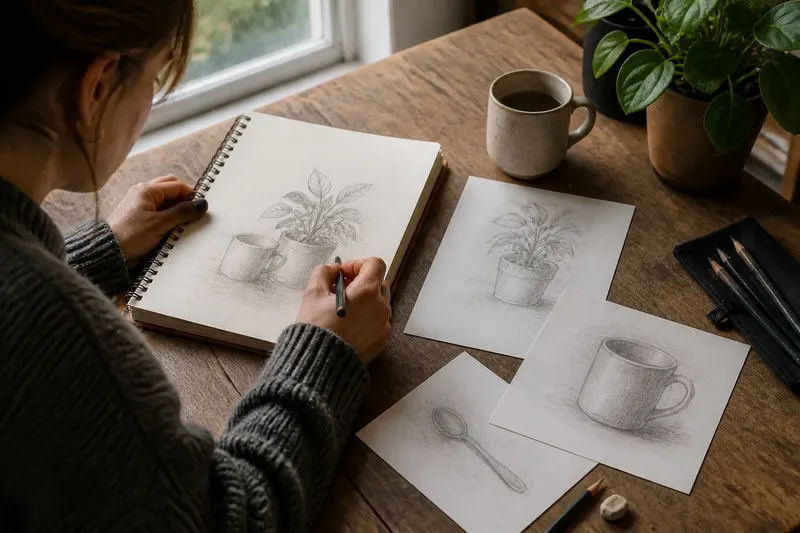
If an audience would make you self-conscious, try the activity somewhere you can stop, pause, or change direction without explaining yourself. A beginner’s drawing exercise, a few chords on a borrowed guitar, or a simple recipe can all be explored privately. Keep the aim modest: spend time with the materials and notice whether the process holds your attention.
For drawing, for instance, you might make a page of circles, shaded blocks, and uneven lines rather than trying to render a polished portrait. The useful question is not whether the page looks impressive. Notice whether choosing a pencil, adjusting your hand, or watching a shape emerge was satisfying.
Privacy fits especially well when comparison is your main distraction. Put away finished work by skilled artists or makers while you try the basic motions. You can look at examples later, once you know what questions you want them to answer.
Choose a private first try when you want room to be uncertain.
When you learn by watching
Some pastimes are easier to enter alongside other people. A pottery class, community choir, beginner dance session, or board-game meetup can show you how a task flows before you have to manage every decision alone. The group provides a setting and a shared activity; it does not need to become an audition.
Look for a session described as introductory or suitable for newcomers, and ask what participants will actually do. A class focused on trying hand-building techniques may suit you better than one organized around completing a particular object. A casual singing group may feel more inviting than a performance rehearsal if you are still deciding whether you like singing with others.
During the activity, pay attention to the social texture as well as the skill. Do you like taking turns, following a shared rhythm, or asking a small question? If you enjoy the people but not the pastime, that is useful information too; you might prefer a different group activity.
Choose a shared first try when seeing and doing alongside others helps you feel at ease.
When you want a finished result
A visible result can be motivating, but it can also tempt you to treat the first attempt as a verdict. If you are drawn to something like baking, knitting, or model making because you want to produce an object, choose a beginner-sized task whose purpose is exploration rather than display.
Imagine you want to learn watercolor. You set out inexpensive student paints, a sheet of watercolor paper, a cup of water, and a brush, then try mixing two colors and making a few loose washes. You expect uneven edges, but you notice that watching the colors meet is enjoyable. That observation gives you a reason to try again, even if the page is not something you would frame.
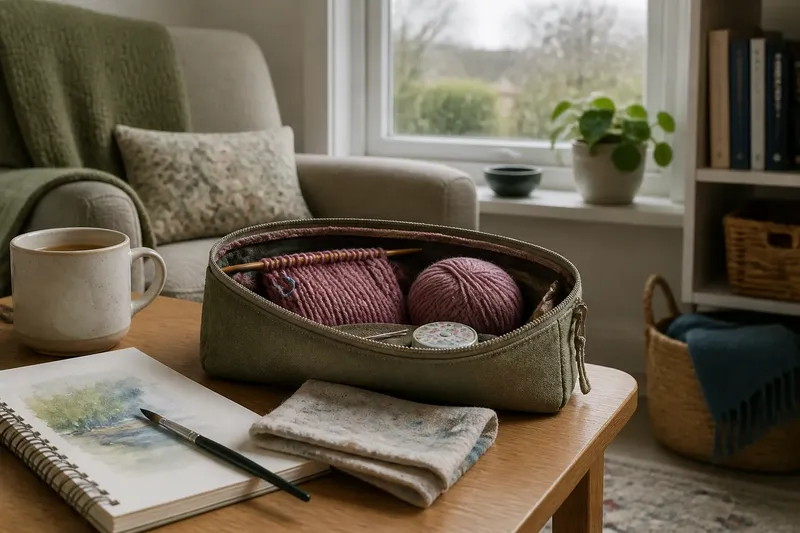
For a craft, the equivalent might be practicing a basic stitch on a scrap of yarn before starting a scarf. You can see whether the repeated hand motion suits you and whether you like handling the material. If you would rather jump straight into a small finished object, choose a forgiving beginner pattern and accept that the result may be useful without looking polished.
Choose a modest project when having something to show matters, but keep the first result small enough to teach you about the activity.
When you fear wasting materials
Concern about supplies can make a first try feel more consequential than it needs to be. Use materials you already own, borrow an item, or ask a local library, community center, or hobby group whether it offers shared equipment. For activities that require specific supplies, start with a sample or practice version if the instructions allow it.
That does not mean every hobby needs a substitute or a purchase. If the materials are unfamiliar, the first decision can simply be whether you want to handle them. A knitting needle may feel awkward in your hands; clay may be pleasantly tactile; a camera’s controls may interest you more than taking pictures. Those reactions help you decide what to try next.
When a product label, maker’s instructions, or local rules affect how materials should be used, follow those directions rather than improvising.
When the first try feels awkward
Awkwardness can mean several different things. You may be learning a motion, feeling watched, struggling with unclear instructions, or discovering that the activity does not appeal to you. Each cause points to a different choice, so avoid treating discomfort as proof that you lack ability.
- You like the activity but not the setting: Try it alone or find a quieter group.
- You enjoy the materials but not the task: Choose a different project using the same materials.
- You feel lost: Seek a clearer beginner explanation or ask someone to demonstrate the basic motion.
- You feel bored even when the task is understandable: Consider trying a different pastime instead of forcing more practice.
Say you attend a beginner pottery session and feel tense because everyone is talking while you work. If shaping clay still interests you, a quieter open studio or a private practice session may fit better. If you find that you dislike the feel of clay itself, switching to another making activity is a reasonable response, not a failure.
Questions to ask yourself?
How long should I try a new hobby?
Stay long enough to understand the basic activity, but do not set a rigid time requirement. If instructions are confusing, seek clarification before deciding you dislike the pastime; if the task is clear and still feels draining, you can stop.
Should I take a class or try it alone?
Choose a class if demonstration, shared momentum, or social contact sounds helpful. Try it alone if you prefer to repeat a motion privately or make choices without keeping pace with a group.
What if my first result looks bad?
Ask whether you enjoyed any part of making it, such as mixing colors, learning a stitch, or solving a small problem. A rough result can still show you which materials or actions deserve another try.
When should I try a different pastime?
Switch when the central activity holds little appeal, even after you have understood the basic task and adjusted an avoidable source of discomfort. You do not need to finish a project or justify leaving a hobby that is not enjoyable.
Choose by enjoyment
After a first attempt, write down one part you liked, one part you did not, and one change you would make if you tried again. “I liked choosing colors; I disliked copying a photograph; next time I’ll paint a simple mug” gives you a clearer direction than “I’m bad at painting.”
Use that note to choose your next session, not to grade your performance. The first attempt is doing its job when it helps you decide what kind of pastime you want more of—and what you are happy to leave behind.